
Dental Emergency in Thunder Bay? Here's What to Do

We've all been there — it's 10 pm on a Sunday, you bite into something, and suddenly there's a sharp pain that makes you put everything down and wonder what just happened. Or maybe you wake up with one side of your face swollen and a throbbing that no amount of ibuprofen seems to touch.
Dental pain has a way of making everything else feel unimportant. And in those moments, the question isn't "should I call a dentist?" it's "how bad does this actually have to get before I do?"
We want to help you answer that question honestly, not with a list of scary symptoms, but with the kind of straightforward information you'd get from a dentist you actually trust.

First Things First: When in Doubt, Call Us
Our honest advice? If something feels wrong with your teeth or mouth, call us. It's always better to have a quick conversation and be reassured than to sit with pain or uncertainty wondering if it will get worse.
Some situations are more urgent than others and that's exactly what we're here to help you figure out. You should never have to make that judgment alone.

Signs That You Should Call a Dentist Today
Pain That Won't Quit
Any tooth pain even if it comes and goes is worth a call to us. Pain that keeps you up at night, makes it hard to eat or drink, or doesn't respond to over-the-counter pain relievers is a clear sign something needs attention. But even milder, intermittent pain can be an early warning sign, and catching it early is always better than waiting.
This kind of persistent pain often points to a deep infection, nerve involvement, or a crack that's gone unnoticed. The sooner it's looked at, the better both for your comfort and to prevent the problem from getting worse.
Swelling in Your Face, Jaw, or Gums
Swelling is one of the most important signs to take seriously. It often means there's an infection, and dental infections don't stay put — they can spread.
If you notice swelling that came on quickly, feels warm to the touch, or seems to be growing, contact a dental office the same day. If that swelling is making it difficult to breathe or swallow, skip the dental office and go straight to the emergency room or call 911. That level of swelling can be a medical emergency.

A Cracked or Broken Tooth
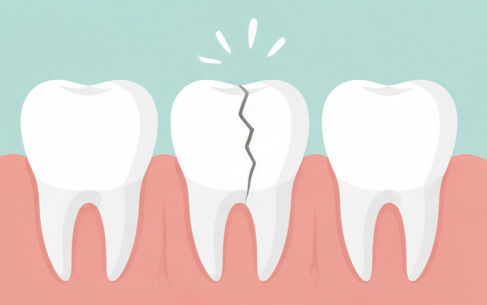
Any crack, chip, or break in a tooth — even one that seems minor — is worth calling us about. What looks small on the surface can go deeper than it appears. Cracks create pathways for bacteria, and what starts as a minor fracture can become a serious infection if left untreated. If you notice a break that exposes the inner part of the tooth, sharp sensitivity to temperature, or any pain at all, call us the same day.
A Dental Abscess
An abscess is a pocket of infection, and it tends to announce itself clearly: throbbing pain, significant swelling, a bad taste in your mouth, sometimes fever, and sensitivity to pressure.
An abscess will not get better on its own. Antibiotics may help manage the infection temporarily, but the underlying cause needs to be treated by a dentist. If you think you have one, please call — don't wait it out.

What You Can Do While You Wait
If you can't be seen immediately, here are some things that can help take the edge off:
Warm salt water rinse — about half a teaspoon of salt in a glass of warm water. Rinse gently. It won't fix anything, but it keeps the area clean and can ease irritation.
A cold compress on the outside of your face — 15–20 minutes on, 15–20 off. This can help with swelling and discomfort.
Over-the-counter pain medication as directed on the label — take whatever pain reliever you normally use safely, following the dosage instructions. Don't place any medication directly on your gum or tooth — it can irritate or burn the tissue. If you have questions about what's safe for you, a pharmacist can help.
Avoid heat — a hot compress or hot food can actually increase swelling and make an infection worse.
These are temporary measures. They're not a substitute for treatment, but they can make a difficult few hours more bearable.
When to Go Straight to the Emergency Room
Most dental emergencies are handled better by a dentist than an ER — hospitals typically aren't set up to do dental procedures. But there are situations where you should go straight to the hospital:
Difficulty breathing or swallowing
Rapidly spreading facial swelling
High fever alongside dental pain or swelling
Significant bleeding that isn't stopping
Serious trauma to the face or jaw
If any of these apply, please don't wait for a dental appointment. Go to the ER or call 911.

A Note on Dental Anxiety
We know that for many people, reaching out when something goes wrong is hard — not just because of the pain, but because dental visits can feel stressful or even frightening. If that's you, please know that you're far from alone, and that telling us how you feel makes a real difference in how we can help.
Our team at Westfort Family Dental takes dental anxiety seriously. We'll talk you through what's happening, move at a pace that feels manageable, and make sure you understand your options before anything happens. You're in charge of your care.

Preventing Emergencies Before They Happen
We'd always rather see you for a routine checkup than an emergency. Regular appointments let us catch things early — a small cavity before it becomes an abscess, a hairline crack before it becomes a break, a worn filling before it fails completely.
A few other habits that go a long way:
Wear a mouthguard for contact sports (this goes for adults too)
Don't use your teeth to open packaging or bottles
If you grind your teeth at night, ask us about a night guard
Address dental discomfort early — waiting rarely makes things cheaper or easier
We're Here When You Need Us
If something doesn't feel right, trust that feeling and give us a call. We'd rather have a conversation and reassure you that everything is fine than have you suffer through a weekend with something that needed treatment days ago.

Westfort Family Dental 124 Frederica Street East Thunder Bay, ON P7E 3V5 📞 (807) 623-3970
The information in this article is intended for general educational purposes and reflects guidance from the Royal College of Dental Surgeons of Ontario (RCDSO) and the Ontario Dental Association (ODA). It is not a substitute for professional dental advice. If you're experiencing a dental emergency, please contact a dental professional or, in life-threatening situations, call 911.

Comments